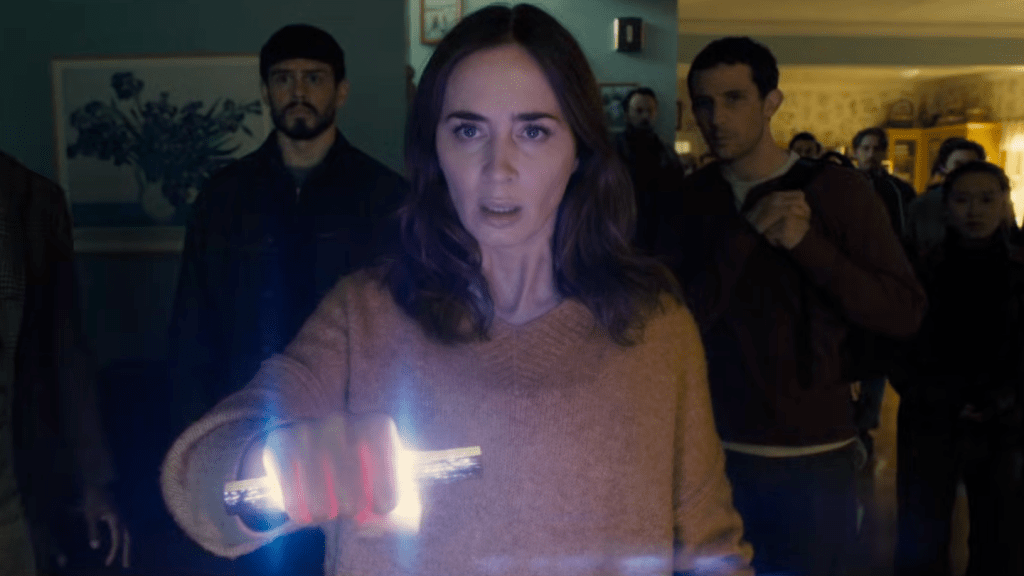
Disclosure Day (2026) is directed by Steven Spielberg, who also wrote the film alongside David Koepp. It stars Josh O’Connor, Emily Blunt, Colin Firth, Eve Hewson, Colman Domingo, Wyatt Russell, Henry Lloyd-Hughes, Elizabeth Marvel, Hettienne Park, Tommy Martinez, Gabby Beans, Jeremy Shamos, Brandon Wilson, Priyanka Kedia, Lora Lee Gayer, and Jim Parrack. The film follows Dr. Daniel Kellner (O’Connor), a whistleblower on the run from a shady government organization alongside his girlfriend, Jane (Hewson). Meanwhile, news anchor Margaret Fairchild (Blunt) inexplicably gains telepathic abilities that urge her to find Kellner and aid him in his quest to disclose information on a classified government conspiracy involving alien life.
Josh O’Connor brings the gooshy sensitivity that’s basically become a trademark of his, but also a certain everyman quality that’s easy to identify with. The back-and-forths he has with Eve Hewson are particularly unique in the sense that their relationship is still new, meaning they can’t fully trust each other despite their clear mutual affection. Certain setpieces take great advantage of this natural tension, blending character and action to great effect.
As the quietly angry, occasionally explosive villain/antagonist, Colin Firth gives one of his best performances since his Oscar-winning role in The King’s Speech (2010). His character isn’t particularly unique, especially for this genre, but like many other aspects of the film, he’s written with a level of depth that sets him apart.
Emily Blunt gives the most impressive performance of the bunch, elevating her otherwise frustrating character. She spends almost the entire film being overwhelmingly confused and scared, which makes complete sense, but we don’t really have time with her before things start going crazy. We only see her in a very heightened state where we’re not even certain if she has full agency over her actions/decisons. Because there isn’t enough characterization before all these factors shake up her normal, it’s tough to get invested in her journey to fix things/find out what’s going on. The only thing we learn about her early on is that she wants to move, her fiancé doesn’t, and it’s causing some subtle tension in the relationship. The script strangely puts a lot of focus on this instead of who Margaret is as an individual, and it’s just not very compelling.
Dropping us into the middle of the action almost immediately, Spielberg quickly establishes a handful of compelling questions while avoiding a slow, lengthy setup. The story definitely slows down at certain points, but Spielberg seems to understand effective pacing better than anyone in the industry. In the hands of a lesser filmmaker, I’m certain this material would’ve had me checking my watch. This gives every sequence just enough edge to feel exciting even when their core ideas aren’t exactly subversive or new.
The film’s biggest issue stems from a more general one I’ve had with Spielberg for the past 20 years: He seems to have too much affection for his stories and characters. Almost every character here is framed as an admirable, moral person who’s unquestionably kind and, at worst, misunderstood. Even if likability is the only goal, this makes them sort of one-note/flat (other than maybe Firth’s villain character), which actually makes them less likable than if they also had a few flaws, because they’re just not as interesting. In fiction, likability is far more often born from moral complexity than moral superiority.
These rose-tinted glasses unfortunately also apply to the film’s themes/ideas, which come across as out of touch. Spielberg seems to imply that if news outlets and the media machine were to deliver some kind of proof that extraterrestrials exist, everyone would trust it, accept it, and band together in some kind of kumbaya love fest. Holy crap; I’m a liberal too, but this is wild, Steven. We’re living in an age where the public’s trust in mainstream media/news is at an all-time low for completely understandable and logical reasons, so the idea that they’ll somehow do the right thing and save the day is absolutely laughable. This obliviousness culminates in the film’s final line of dialogue, “Listen.” To who? Mainstream news? No thanks, buddy. People who claim aliens are real and living among us? I’ll choose “take my chances” for $1000, Alex. How about the pretty news lady making click-clack sounds on primetime? I can’t really understand her anyway. Look, I agree with the general sentiment that listening to people is a positive thing, but it just doesn’t fit here.
My only other issue is that I think the choice to visualize the aliens as the most stereotypical version of movie martians hurts the believability. Maybe this is trying to imply that movie aliens have been directly inspired by real accounts that have just been classified to the general public, but unless you believe Spielberg’s artistic influence has given him access to top-secret info, them looking this way seems unlikely. If we don’t know what Martians look like, why would we assume that, out of all the possibilities, they’d be exactly how we imagine them?
Overall, this is an extremely accessible, consistently entertaining extra-terrestrial conspiracy thriller that proves Spielberg is still one of the more capable directors working today. However, the film also confirms my long-held suspicion that Spielberg is just getting a little old. A Spielberg who’s lost a step is still a top-tier director, but I’m not really expecting greatness when I walk into one of his films. The ideas and messages here fall surprisingly flat despite their clarity, making me wish it had a more mysterious approach to its material, similar to his classics such as Close Encounters of the Third Kind (1977) and even War of the Worlds (2005). If you enjoy a decent alien thriller, give it a shot, but you can wait for it to hit streaming services. B-


