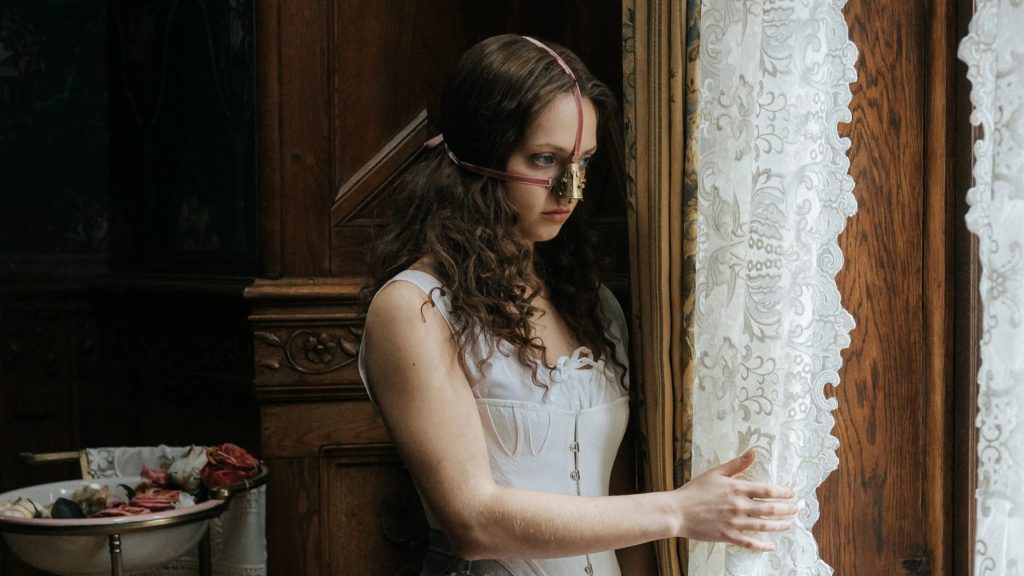
The Ugly Stepsister (2025) is written & directed by Emilie Blichfeldt. It stars Lea Myren, Thea Sofie Loch Naess, Ane Dahl Torp, Flo Fagerli, Isac Calmroth, Malte Gardinger, Ralph Carlsson, Katarzyna Herman, Adam Lundgren, Willy Ramnek Petri, Cecilia Forss, Kyrre Hellum, and Philip Lenkowsky. The film is a dark twist on the classic Cinderella story, this time told from the perspective of the ugliest stepsister, Elvira (Myren). Although ridiculed by her peers, she believes that one day a prince will sweep her off her feet. To make her dream come true, Elvira is willing to cross any line, no matter how sick and depraved.
The cast succeeds in drawing a satisfying level of emotion from their various characters, which results in them feeling modern without the need for additions such as hip, out-of-place dialogue. The only real modernization is the way in which these young women respond to hardship. In medieval times, showing such unchecked emotion was not something people often allowed or accepted (from women, especially). That being said, it is something that at least feels possible within the context of the era. Thus, it feels like a natural and fitting modernization of the material.
The film is much less exploitative than I was expecting. Instead, it’s more of the classic Cinderella story we know, but told from the perspective of one of its darker characters, the Ugly Stepsister. The story itself isn’t changed as much as one would expect; it’s just that Elvira’s experience is inherently horrific in comparison to Cinderella’s. In other words, the classic story isn’t changed to be more horror-adjacent; we’re just made aware of some darker things that were taking place in the background.
As opposed to a surface-level horror splatterfest, the film is a cautionary tale that focuses on the dangers of prioritizing external beauty above all else. It’s a slow-burning story that sees Elvira incrementally have to pay the price for her obsessive attempts at beautification. This is a satisfying direction in terms of how it highlights the film’s overarching themes, but it’s also disappointing as a cathartic, more accessible horror experience. The body horror elements are appropriately icky, but the script promises a kind of dark revenge story that it never fully delivers on. It’s as if Blichfeldt was never able to decide what type of film she was aiming to create, resulting in a script that contains numerous half-cooked themes.
There’s something animalistically cathartic about seeing Elivra take complete control of her destiny, despite her evil actions. The problem is that, halfway through, we’re asked to stop seeing Elivra as the victim, and begin sympathizing with the people who initially ostracize her. This eliminates any kind of complicated empathy for Elvira and forces us to root for other characters we don’t particularly care about. Loch Naess’s Cinderella-adjacent character may draw sympathy from a small portion of the audience, but she’s decidedly less interesting than Elivra in almost every way. The character may be good-natured, but that doesn’t mean she’s a good character. That being said, she does help to highlight the theme that individuals face hardships regardless of how beautiful they are; they’re just not always the same kind. Sometimes, being desired by everyone is just as painful as being desired by no one.
Overall, this is essentially just a story about a girl being driven to madness by society’s absurd female beauty standards. On that simple level, the film is a success. Unfortunately, it never quite works as an accessible, traditionally entertaining horror experience. Blichfeldt lends the movie some unique visual flair, but the use of hot-pick, neon-soaked colors just feels overplayed at this point. I guess they didn’t feel like the story was enough to highlight the themes of female empowerment, so they just drenched everything in pink for good measure. If this sounds like your kind of subject matter, give the film a shot. I, for one, found this to be a very odd viewing experience. It’s way too niche for most audiences, but might be a cult classic for the right group of people. C+

 The Movie Matt