Based on the short story by Stephen King, The Life of Chuck (2025) is written & directed by Mike Flanagan. It stars Tom Hiddleston, Benjamin Pajak, Jacob Tremblay, Chiwetel Ejiofor, Karen Gillan, Mia Sara, Mark Hamill, Carl Lumbly, Matthew Lillard, Rahul Kohli, Violet McGraw, Samantha Sloyan, Annalise Basso, Kate Siegel, Saidah Arrika Ekulona, Trinity Jo-Li Bliss, David Dastmalchian, Harvey Guillen, Nick Offerman, Q’orianka Kilcher, and The Pocket Queen. The film is told out of chronological order, exploring three moments in the life of an ordinary man named Charles “Chuck” Krantz (Hiddleston, Pajak, Tremblay): childhood, adulthood, and his final moments. Together, these three chapters work as a meditation on the nature of life and death, forcing the viewer to consider the larger scope of what’s lost when someone leaves this Earth. As a result, the viewer is reminded of the small details that make life undoubtedly worth living.
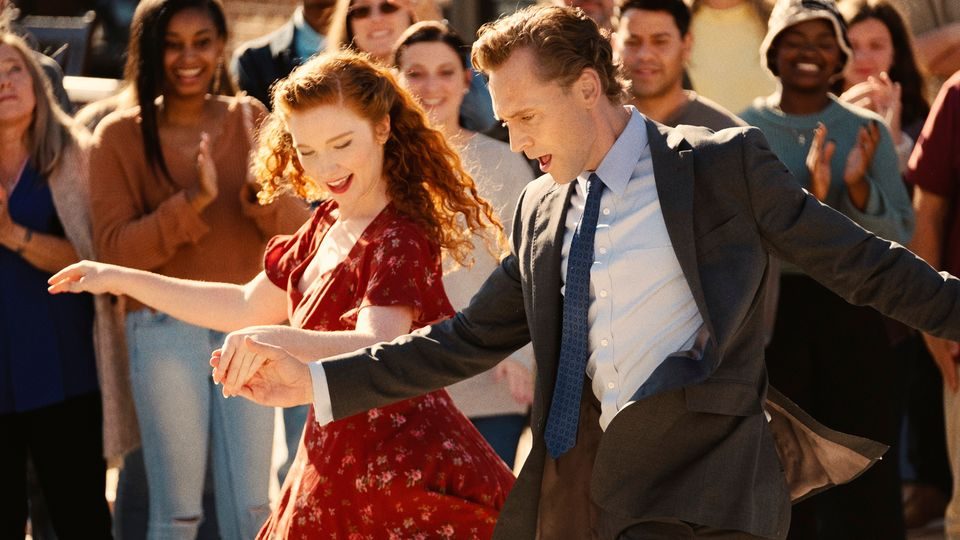
The protagonist, Charles “Chuck” Krantz, is portrayed by four actors at different stages in his life, but he surprisingly doesn’t come into play until the film’s second act. It’s more of an ensemble piece than I was initially expecting, with characters played by Chiwetel Ejiofor and Mark Hamill each receiving as much focus as Chuck. Tom Hiddleston portrays the adult version of Charles, and although he’s plastered all over the film’s marketing, his portrayal of the character is not the one that stands out. Don’t get me wrong, Hiddleston is excellent as always, but he doesn’t receive many of the film’s more memorable scenes (excluding one particular dance sequence). Benjamin Pajak, as the youngest version of Chuck, is the surprise standout. He effectively sells the emotional, almost ‘Spielbergian’ wonder that laces the softer side of Stephen King’s bibliography. I’ve seen proven adult actors fail to deliver this material many times in the past, which makes his performance only that much more impressive.
The decision to tell Chuck’s story out of chronological order initially feels like a superfluous creative choice, but I should’ve known King would have something up his sleeve. This helps highlight one of the film’s themes, the idea of life & death transcending linear time, but also works to inject mystery, engaging the audience, and raising intriguing questions that help propel them through what would otherwise be an exercise in stale sentimental storytelling. It also works to make certain pieces of exposition feel like massive plot twists that reframe previous events, providing that A-ha moment you get after finding the missing puzzle piece. This mostly keeps the film interesting, though it lacks any kind of traditional climax, which I could see some people appreciating, but to me, it just makes the experience feel as if something is missing. The closest thing to a climax here is a middle school formal-set dance sequence, which is one of the film’s stronger scenes. I hate to say it, but it’s just a little disappointing to watch a Stephen King film where danger is traded for dance.
The film can often be frustrating due to its lack of clear answers to the big, abstract questions it asks about the nature of life and death, but that’s also kind of the point. We can’t answer these questions and most likely never will, but they’re also the kind of questions we can’t help but ask. Thus, we have to feel our way through the mystery of it all. The film intelligently explores its themes through an emotional lens, allowing the viewer to interpret the story’s side-by-side display of both the ugliest and most beautiful aspects of life in any way they see fit.
Besides the sometimes disappointing directions this story sometimes takes, the only issue that stood out to me was the choice to include a tonally jarring voiceover by Nick Offerman. There’s never any information as to who this mysterious voice is or why he’s narrating Chuck’s story, and he ultimately only serves to deliver exposition that’s either unnecessary or was already being told visually. This even includes a scene where the adult narrator has to inform us that the 8th-grade girl young Chuck has a crush on is totally “gorgeous.” If this narrator guy were her dad and saying this in a supportive way, I guess it makes sense, but he could be anyone, which makes it more than a bit creepy.
Overall, this is a unique, slightly flawed, but ultimately compelling exploration of the mysterious nature of life & death. The irregular plot structure primarily works in the film’s favor, but also causes some of its more problematic flaws. Thankfully, Flanagan’s visual flair and some strong performances from the large ensemble cast are just a couple of elements that make it stand out. Stephen King fans might be disappointed if they walk into this expecting a classic King fright fest, or even something like Stand By Me or The Shawshank Redemption. If you’re able to drop your expectations at the door, it works as a unique addition to King’s collection of iconic tales, and that alone makes it worth giving a shot. B–

 The Movie Matt