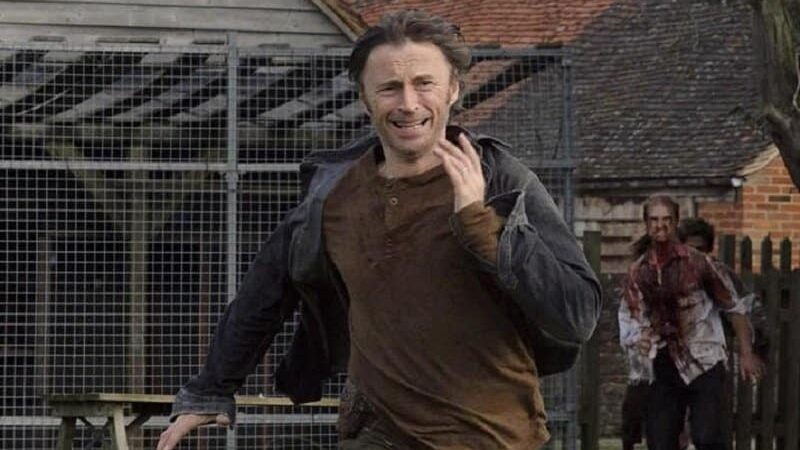
28 Weeks Later (2007), directed by Juan Carlos Fresnadillo, stars Robert Carlyle, Rose Byrne, Jeremey Renner, Imogen Poots, Mackintosh Muggleton, Harold Perrineau, Catherine McCormack, and Idris Elba. The film takes place approximately six months after the events of 28 Days Later (2002) and follows a survivor named Don (Carlyle) who arrives with his family at a quarantined section of London. With the help of the United States military, survivors within the quarantine zone work to rebuild and protect themselves from the relentless Rage virus that continues to plague the remainder of the city. When Don’s actions unintentionally ignite fears of a new outbreak within the walls of the safe zone, a group of survivors led by a US soldier named Doyle (Renner) and a medic named Scarlet (Byrne) attempt to escape London before the Pentagon burns the city to ash.
As Don, Robert Carlyle once again proves to be one of the most underused and underappreciated actors in Hollywood. He injects the character with a level of desperate complexity that provides the film with the necessary pathos. The character is extremely complex and forces the audience to consider how their morals might shift amid a life-or-death situation. However, the film makes the perplexing choice of shifting the character focus about halfway through. At that point, we begin to follow Renner and Byrne’s characters. These two are likable enough, but not nearly as compelling or complex. That being said, this shift is a surprising one that succeeds in terms of plot even if it happens to come at the expense of certain characters. That being said, it helps to keep the pacing swift and exciting where most films would hit a midpoint lull.
Compared to its predecessor, 28 Weeks Later is injected with a much heavier dose of action. This isn’t necessarily an improvement or deterioration, but it does signal a clear difference in style. The thing is, this heavier focus on action doesn’t come at the expense of the scares. I would even argue that this film is scarier than its predecessor in certain portions. Unlike the first film, there’s a palpable feeling of tragedy to all of the violence and general misfortune. The film focuses on the idea that humans are often destined to repeat the mistakes of the past (which is what I also think 28 Years Later will eventually explore). This feeling that all of this could have been easily avoided makes the film all the more terrifying.
As far as sequels go, this film is a roaring success. It tops the first film in terms of scale, scares, setpieces, and special effects. Unfortunately, the film is still notably lesser than the first film due to the much weaker characters and the inherent derivative nature of sequels in general. The film focuses so much on the spectacle of things that it sometimes forgets to build the foundations of a story worth attaching ourselves to (characters).
Overall, this is one of the better sequels of the 21st century as well as a dynamite zombie movie that constantly works to subvert the genre. Although notably a step down from the first film, this is only because of weaker characters that don’t have time to receive the proper nuance. If you’re craving a modern zombie film that is severely under-appreciated, there aren’t many better choices than 28 Weeks Later. B

 The Movie Matt