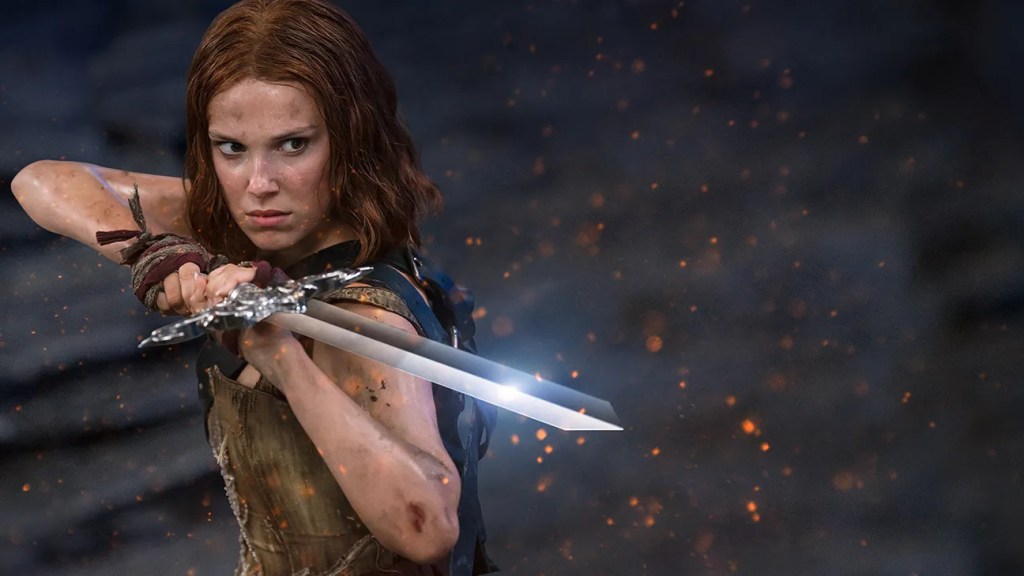
Damsel (2024), directed by Juan Carlos Fresnadillo, stars Millie Bobby Brown, Ray Winstone, Angela Bassett, Brooke Carter, Robin Wright, Nick Robinson, and Shohreh Aghdashloo. The film follows Elodie (Brown), a young princess who finds out she is arranged to be married to a handsome prince (Robinson) from one of the realm’s most powerful kingdoms. Unfortunately, the marriage is simply a facade to use Elodie as a human sacrifice to the vengeful powerful dragon (Ashdashloo) who looms over the kingdom. Thrown into the dragon’s lair with nothing but her wedding dress and wits, Elodie desperately fights to survive the dragon and ultimately escape.
The cast is filled with multiple capable performers, and this is the only thing that saves the characters from being forgettable caricatures. The dialogue is weak/unoriginal and the characterizations almost feel as if they were studio-mandated. For example, the script is often very on-the-nose when it comes to its feminist themes. The movie immediately opens with the claim that this ISN’T a “damsel in distress” movie, it’s just simply about the Damsel. The thing is, she’s in “distress” the entire movie! Just because she isn’t going to be saved by a man doesn’t mean she’s in any less distress. Feminist themes are inherently baked into the story, so why the feel the need to scream it at the audience some more? Not only is it insulting to the audience’s intelligence, but it’s likewise not some tough-to-understand theme that needs to be hammered home again and again. This causes these elements to feel like modern-day finger-waving at the male viewer and it’s unnecessary. No one would have a problem with the females kicking ass here, but the script still feels the need to remind us that we shouldn’t have a problem with it. Ok, I never did have a problem with it and I feel like the people who would, wouldn’t choose to watch the movie in the first place. All this being said, I think these feminist themes feel a bit more natural than how they’re implemented in most modern films because it’s subverting a specific and well-known character trope. It also helps that Millie Bobby Brown gives a believable performance as a female action hero. It’s too bad that the script fails to distinguish her within the genre. For example, the third act features Elodie on a boat as a dragon flies close by. This is already reminiscent of a famous shot of Emila Clarke in Game of Thrones, but on top of this, Brown wears a ragged, burned outfit almost identical to Clarke.
The story here is fine, but it has almost nothing new to offer. It’s a serviceable, unoriginal, yet inoffensive little dragon-focused fairy tale. Yet, the movie stumbles when it comes to its script. Besides one somewhat decent (yet spoiled in the marketing) twist in the first act of the film, there’s not a single portion that stands out. For example, the second act lacks any forward momentum and ends up feeling like a lackluster survival story that has absolutely nothing to say. It just follows Elodie finding new sources of light to explore to cave and tearing her wedding dress apart to use as bandages. On top of this, because Elodie is the only character on screen for a large portion of the movie, she often delivers exposition by talking aloud to herself. It’s scriptwriting 101 that when at all possible, show instead of tell. How often do people talk to themselves to this extent? Answer: no one.
Overall, this is an extremely forgettable fantasy film that is only elevated by its strong cast of performers. The visuals are mid, the action is mid, and the characters are frustratingly plain. This is the kind of movie that feels like each scene was voted on in a soulless Netflix boardroom, almost like it’s the epitome of a movie made simply to check boxes. It won’t bore you to death, but it won’t excite you either. If this is your genre, you probably won’t hate it. Everyone else can skip without a care in the world. However, something tells me this is the kind of movie Netflix can’t wait to make a sequel to. C

 The Movie Matt